
International Travel
Intermodal South America 2026: how to organize your team's trip strategically
January 13, 2026
Understand how travel planning affects companies' productivity and results at trade fairs such as Intermodal.
The relevance of Intermodal
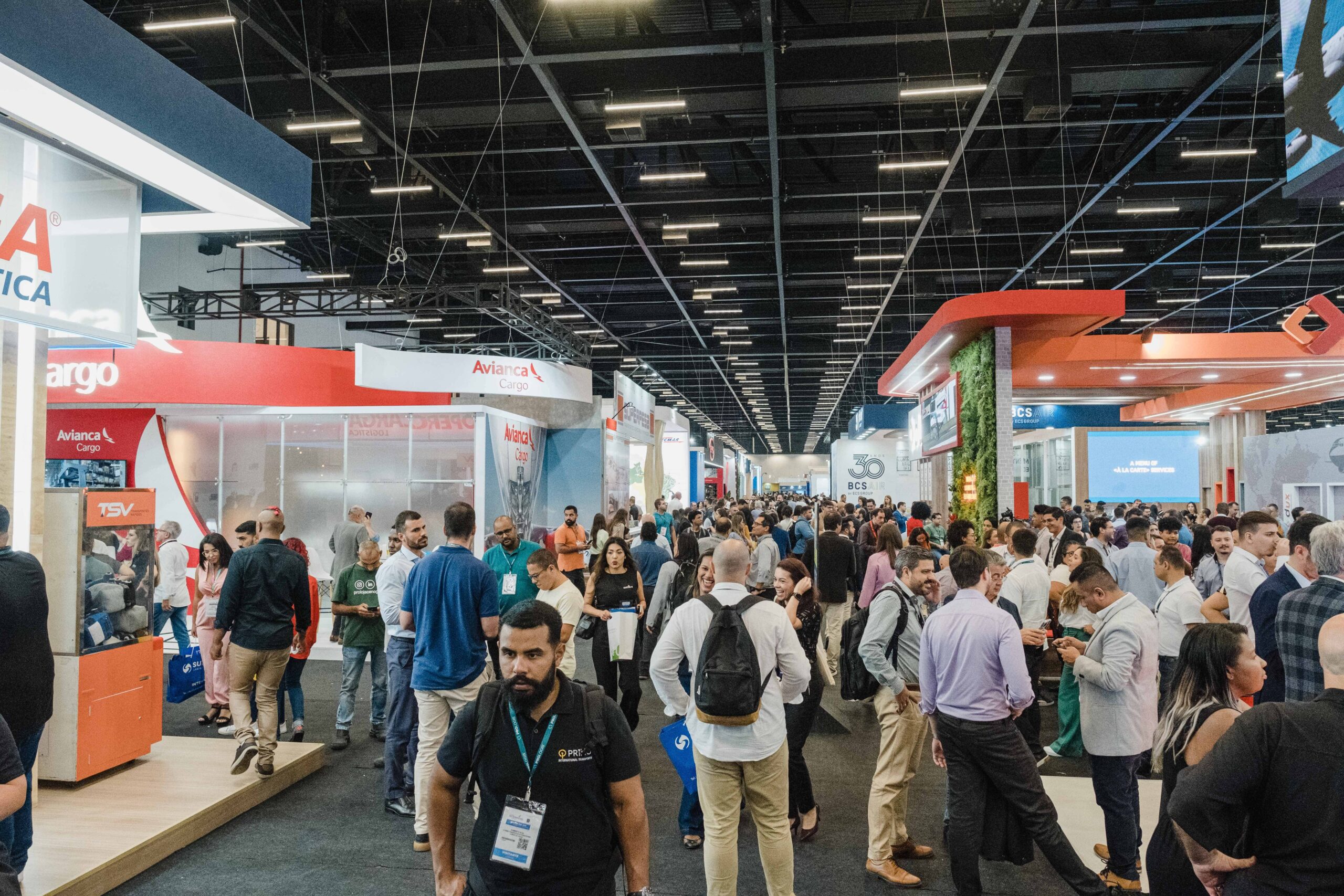
Intermodal South America 2026 already has a date, a venue and, above all, well-established relevance. The 2025 edition made this clear by bringing together almost 50,000 professionals at the Distrito Anhembi in São Paulo and reinforcing the fair's strategic role as a meeting point for those who build, operate and plan the future of logistics, transport and foreign trade. It is not just an event you have to attend, but an environment where important decisions are made, relationships are deepened and business opportunities arise.
In this context, the way a company organizes its team's participation stops being an operational detail and becomes part of the event strategy itself. Practical experience shows that, at fairs of this size, success doesn't depend only on the quality of the booth, the sales agenda or the team's technical preparation. The logistics that support it all — travel, accommodation, schedules and group coordination — directly influence productivity, focus and even the corporate image the company conveys to the market.
When logistics stops being a detail
Yet even when aware of its strategic relevance, companies often choose to make bookings as each employee is confirmed. At first glance, this seems prudent, since the final list of participants isn't always defined far in advance. In practice, however, this model usually has undesirable consequences: rising costs with each new purchase, difficulty finding accommodation near the venue, employees spread across different flights and hotels, and a fragmented operation that requires constant coordination. At an event that demands full attention to running the booth, the meeting agenda and relationships with clients and partners, poorly planned logistics becomes a big problem.


What changes when the team's logistics is treated as part of the strategy rather than an operational detail?
Early planning and group blocks
This is exactly where flight and hotel blocks come in as a strategic solution, not just a financial one. By reserving blocks in advance, even before all travelers are defined, the company secures better fares before prices naturally rise, keeps access to more convenient flights and guarantees accommodation in well-located hotels. What's more, it keeps flexibility: names can be confirmed closer to the event without affecting cost or availability.
The impact of this model goes beyond direct savings. When the team travels together, stays in the same place and shares integrated logistics, management becomes simpler, employees are better aligned and the working environment during the fair flows more smoothly. Anyone who has had to coordinate a large group of employees for several days while setting up, running and staffing a corporate booth knows how small mix-ups can undermine pace, energy and efficiency. In this context, well-resolved logistics directly affects team performance.
There is also a less tangible but equally important aspect: internal and external perception. For employees, an organized operation conveys care, professionalism and a sense of belonging. In addition, time together outside the usual work environment, when well structured, strengthens bonds and boosts engagement, especially in sales and account teams. For the market, a company that arrives organized, punctual and cohesive reinforces an image of solidity, planning and maturity — attributes that carry weight in highly competitive environments such as Intermodal.
The impact of logistics on team performance
The experience of companies that take part in the event regularly confirms this effect. Teams that plan early, with well-structured blocks, report not only more logistical peace of mind but also making better use of the event as a whole. The focus stays where it should be: on connections, negotiations and strategic market presence.
Intermodal 2026 will not be smaller, simpler or less crowded than the previous edition. On the contrary, everything suggests the event will keep growing in relevance and complexity. Given this, treating the team's trip as a merely operational decision underestimates its impact on final performance, because planning ahead, securing blocks and structuring logistics in an integrated way is not just a more economical choice — it is a strategic one.
Your next journey starts here